

A request for qualifications (RFQ) is a formal document that is used to solicit information from potential suppliers or vendors about their qualifications to provide a specific good or service. RFQs are typically used in a two-step procurement process, where the first step is to pre-qualify potential suppliers and the second step is to invite qualified suppliers to submit proposals.
RFQs are used by a variety of organizations, including:
- Government agencies
- Private companies
- Non-profit organizations
- Educational institutions
RFQs are typically used for projects that are complex or high-value, such as:
- Construction projects
- IT projects
- Consulting projects
- Professional services projects
The purpose of an RFQ is to:
- Identify qualified suppliers who are capable of delivering the required good or service
- Assess the suppliers' experience, expertise, and resources
- Narrow down the pool of potential suppliers to a manageable number
- Ensure that the suppliers meet the organization's minimum requirements
The RFQ process typically involves the following steps:
- The organization develops an RFQ document that outlines the requirements of the project and the evaluation criteria that will be used to select qualified suppliers.
- The RFQ is distributed to potential suppliers, who are invited to submit their qualifications statements.
- The organization evaluates the qualifications statements and selects a shortlist of qualified suppliers.
- The organization invites the shortlisted suppliers to submit proposals for the project.
- The organization evaluates the proposals and selects the supplier that best meets its needs.
RFQ documents typically include the following information:
- A description of the project
- The organization's requirements
- The evaluation criteria
- The submission deadline
- The contact information for the organization
When writing an RFQ, it is important to be clear and concise. The RFQ should clearly state the requirements of the project and the evaluation criteria. The RFQ should also be fair and objective, and it should not give any one supplier an unfair advantage.
Here are some tips for writing an effective RFQ:
- Be specific and clear in your description of the project and your requirements.
- State the evaluation criteria and the weighting of each factor.
- Be fair and objective in your evaluation criteria.
- Give suppliers enough time to respond to the RFQ.
- Make the RFQ process easy to understand and follow.
RFQs can be a valuable tool for organizations that are looking to procure goods or services from qualified suppliers. By using an RFQ, organizations can save time and money, and they can be more confident that they are selecting the best possible supplier for their needs.
Benefits of Using an RFQ Process
There are a number of benefits to using an RFQ process, including:
- Pre-qualify suppliers: RFQs can be used to pre-qualify suppliers and ensure that they meet the organization's minimum requirements. This can save the organization time and money by narrowing down the pool of potential suppliers to a manageable number.
- Assess supplier qualifications: RFQs can be used to assess the suppliers' experience, expertise, and resources. This can help the organization to select the supplier that is best qualified to deliver the required good or service.
- Get competitive pricing: RFQs can help the organization to get competitive pricing from suppliers. By inviting multiple suppliers to submit proposals, the organization can compare prices and select the most affordable option.
- Make informed decisions: RFQs can help the organization to make informed decisions about supplier selection. By evaluating the suppliers' qualifications and proposals, the organization can select the supplier that best meets its needs.
When to Use an RFQ Process
RFQ processes are typically used for complex or high-value projects. They can also be used for projects where the organization is not familiar with the supplier market or where it needs to ensure that the suppliers meet its specific requirements.
Here are some examples of situations where an RFQ process may be appropriate:
- The organization is procuring a complex or high-value good or service, such as a new IT system or a construction project.
- The organization is not familiar with the supplier market and needs to identify qualified suppliers.
- The organization has specific requirements that need to be met by the supplier, such as experience in a particular industry or a commitment to sustainability.
- The organization wants to get competitive pricing from multiple suppliers.
How to Write an Effective RFQ
When writing an RFQ, it is important to be clear and concise. The RFQ should clearly state the requirements of the project and the evaluation criteria. The RFQ should also be fair and objective, and it should not give any one supplier an unfair advantage.
Here are some tips for writing an effective RFQ:
- Be specific and clear in your description of the project and your requirements. This will help the suppliers to understand what you are
WebThe Municipal Public-Private Partnership Framework - Module 8: Sample Request for. WebJuly 10, 2023. Requests for Qualifications (RFQs) are commonly used as a tool invite. Webpractice to begin by issuing an RFQ (Request for Qualifications). Here's. WebThe pre-qualification process consists of preparing and issuing the. WebRequest For Qualifications (RFQ means the written solicitation, including all Addenda. WebUnlike an IFB, ITB, or a RFP, price is not a factor under the solicitation.
Requests for Qualifications (RFQs), Agency Search Series, Episode 8

Source: Youtube.com
When should you use an RFQ v. an RFP

Source: Youtube.com
What Is A Request For Qualifications, Requests for Qualifications (RFQs), Agency Search Series, Episode 8, 3.02 MB, 02:12, 378, CommunicationsMatch, 2018-05-02T00:18:45.000000Z, 2, The Other RFQ: Request for Qualifications Tips & Template - RFP360, 422 x 600, jpg, , 3, what-is-a-request-for-qualifications
What Is A Request For Qualifications. Webbe useful, issuing an RFQ (Request for Qualifications) is a good practice that can help. WebA story of two RFQs: Request for qualifications vs. request for quote. Admittedly, there.
In this eighth in our series of videos on agency search, Robert Udowitz of RFP Associates discusses the importance of Requests for Qualifications (RFQs). Udowitz is interviewed by Simon Locke, Founder & CEO of CommunicationsMatch for the Agency Search Resource Center. communicationsmatch.com/agency-search-resource-center
What Is A Request For Qualifications, WebThe pre-qualification process consists of preparing and issuing the. WebRequest For Qualifications (RFQ means the written solicitation, including all Addenda. WebUnlike an IFB, ITB, or a RFP, price is not a factor under the solicitation.
The Other RFQ: Request for Qualifications Tips & Template - RFP360 - Source: rfp360.com
2 - Source:
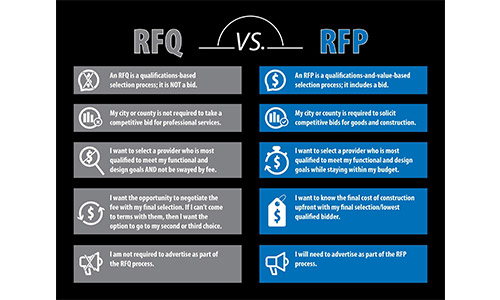
REQUEST FOR QUALIFICATIONS OR REQUEST FOR PROPOSAL 2.0 | Shive-Hattery - Source: shive-hattery.com
What is a qualified written request learn.g2.com › request-for-qualificationsGuide to Request for Qualifications: Prioritizing Expertise - G2
What is a qualified written request A request for qualifications (RFQ) is a process used in procurement to compare the expertise of vendors. The RFQ document contains background information and context about the need or problem to be solved and questions for vendors to answer. Typically, these questions focus on a potential supplier's knowledge, experience, reputation and , Is a request a requirement.
Is a request a requirement
Is a request a requirement What is a benefit of issuing a request for qualifications.
What is a benefit of issuing a request for qualifications
What is a benefit of issuing a request for qualifications What is the purpose of a request for qualifications.
.
What is the purpose of a request for qualifications
What is the purpose of a request for qualifications What is a request for qualifications.
.
What is a request for qualifications
What is a request for qualifications What is the purpose of a request for qualifications.
.
en.wikipedia.org › wiki › Request_for_qualificationsRequest for qualifications - Wikipedia
Request for qualifications. A request for qualifications ( RFQ) is a step sometimes used in the formal process of procuring a product or service, for example by a government agency. It is typically used as a screening step to establish a pool of vendors (businesses or individuals to provide a product or service) that are then qualified, and , .
.
www.procore.com › library › what-is-an-rfqWhat is an RFQ in Construction? | Procore
Project owners use a request for qualifications (RFQ) to narrow down a list of contractors to find those who meet the criteria to bid on a specific project. General contractors use a request for quote (RFQ) during the change order process to determine the specific cost of a required change. This terminology is most common in change management , .
A request for qualifications (RFQ) is a step sometimes used in the formal process of procuring a product or service, for example by a government agency. It is typically used as a screening step to establish a pool of vendors (businesses or individuals to provide a product or service) that are then qualified, and thus eligible to submit responses to a request for proposals (RFP). Wikipedia .
beckerlawyers.com › requests-for-qualificationsRequests For Qualifications – What They Are And ... - Becker
A RFQ is generally a written request for proposers or bidders to compete for a project based on their experience and ability to perform the project. Like an IFB or RFP, RFQ specifications may contain a statement or scope of the work sought, evaluation criteria, and minimum standards. Sometimes an RFQ is used narrow the field of proposers in , .
.
.
sdbjrfoundation.org › wp-content › uploadsWRITING A REQUEST FOR QUALIFICATIONS (RFQ)
erent from an RFP (Request for Proposals). An RFQ asks candidates to submit a brief summary of their qualifications (i.e., evidence of their ability to do the work), while an RFP requires them to submit a comprehensive project proposal (i.e., a detailed explanation o. the approach, methodology, budget, etc.).Responding to an RFP is time consum. .
www.azwestern.edu › sites › defaultWHAT IS THE DIFFERENCE BETWEEN RFP & RFQ
REQUEST FOR QUALIFICATIONS (RFQ) Whenever you wish to establish a list of prequalified Contractors, you can use an RFQ. (An RFQ can also be a Request for Quote depending on the context in which it is being used. Similar to an RFP, an RFQ extends a solicitation notice to known Contractors and to others by invitation. Rather than making an .
www.responsive.io › blog › request-for-qualificationsThe Other RFQ: Request for Qualifications Tips & Template - RFPIO
A request for qualifications is a document that asks potential suppliers or vendors to detail their background and experience providing a specific good or service. In this case, the buyer is only concerned about the vendor's skills and experience. Therefore, the response is not a bid. .
What is a qualified written request.


 is a formal document that is used to solicit information from potential suppliers or vendors about their ...)
Post a Comment