
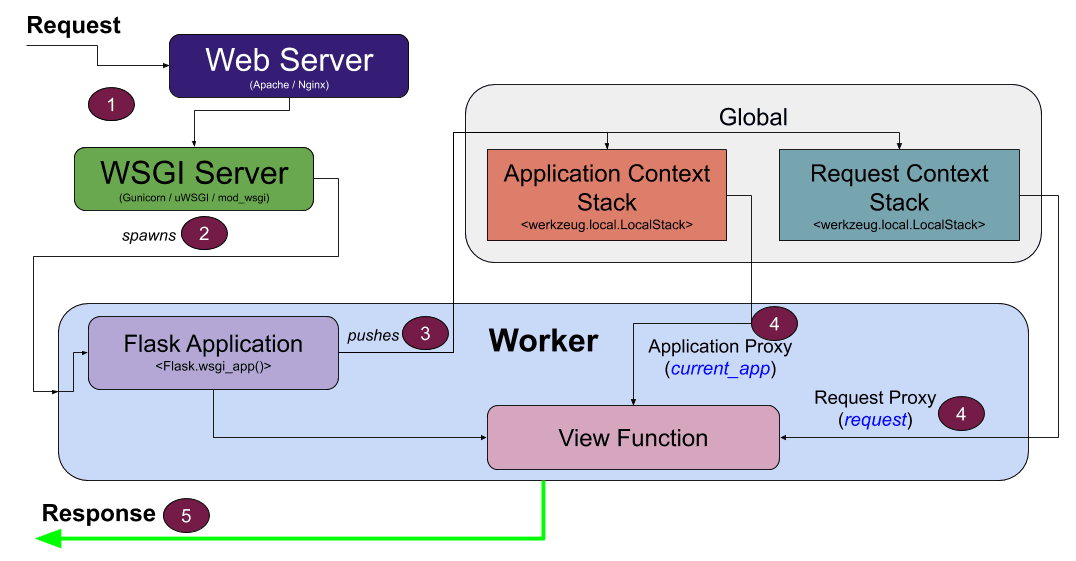
A request context is a collection of data that is associated with a single HTTP request. This data can include information such as the request method, the request URI, the request headers, and the request body. The request context is used by web applications to process requests and generate responses.
Why Is A Request Context Important?
The request context is important because it allows web applications to handle requests in a consistent and efficient manner. By storing all of the request data in a single location, web applications can avoid having to pass this data around between different functions. Additionally, the request context can be used to store information that is specific to the current request, such as the user's session data or the current locale.
How Is A Request Context Used?
The request context is used by web applications in a variety of ways. For example, the request context can be used to:
- Determine the request method and the request URI.
- Access the request headers and the request body.
- Store information that is specific to the current request, such as the user's session data or the current locale.
- Generate responses to requests.
Examples of Request Context Data
The following are some examples of data that can be stored in a request context:
- The request method (GET, POST, PUT, DELETE, etc.).
- The request URI (the URL of the requested resource).
- The request headers (e.g., the Content-Type header).
- The request body (e.g., the form data submitted by a user).
- The user's session data (e.g., the user's login status).
- The current locale (e.g., the user's preferred language).
How to Access the Request Context
The request context can be accessed from anywhere in a web application. However, the specific way to access the request context depends on the web framework that is being used.
For example, in the Flask web framework, the request context can be accessed using the request global variable. In the Django web framework, the request context can be accessed using the request object that is passed to each view function.
Conclusion
The request context is an important part of any web application. By storing all of the request data in a single location, request contexts allow web applications to handle requests in a consistent and efficient manner.
Here are some examples of how request contexts are used in different web frameworks:
- Flask: The
requestglobal variable in Flask provides access to the current request context. This variable can be used to access the request method, the request URI, the request headers, and the request body. For example, the following code prints the request method to the console:
from flask import request print(request.method) - Django: The
requestobject that is passed to each view function in Django provides access to the current request context. This object can be used to access the request method, the request URI, the request headers, and the request body. For example, the following code prints the request URI to the console:
from django.http import HttpRequest def my_view(request: HttpRequest): print(request.path) Benefits of Using Request Contexts
There are several benefits to using request contexts in web applications, including:
- Consistency: Request contexts help to ensure that requests are handled in a consistent manner across different parts of a web application.
- Efficiency: Request contexts can improve the efficiency of web applications by avoiding the need to pass request data around between different functions.
- Flexibility: Request contexts can be used to store information that is specific to the current request, such as the user's session data or the current locale.
Overall, request contexts are an essential part of any modern web application framework. They provide a number of benefits, including consistency, efficiency, and flexibility.
WebRemarks. You get a request context from an IReplyChannel.Each RequestContext encapsulates the information required to reply to the request, so that you do not have to. WebRequestContext public RequestContext(javax.servlet.http.HttpServletRequest request) throws javax.servlet.ServletException Create a new RequestContext for the given. WebThe method request_context() returns a new RequestContext object and uses it in combination with the with statement to bind the context. Everything that is called from the. WebThe RequestContext class contains information about the HTTP request in the HttpContext property. It contains information about the route that matched the current request in the. WebA context for a single request to manipulate a flow execution. Allows Web Flow users to access contextual information about the executing request, as well as the governing. WebThe Request Context¶ The request context keeps track of the request-level data during a request. Rather than passing the request object to each function that runs during a.
Request Context - 1-minute IAM - Amazon Web Services

Source: Youtube.com
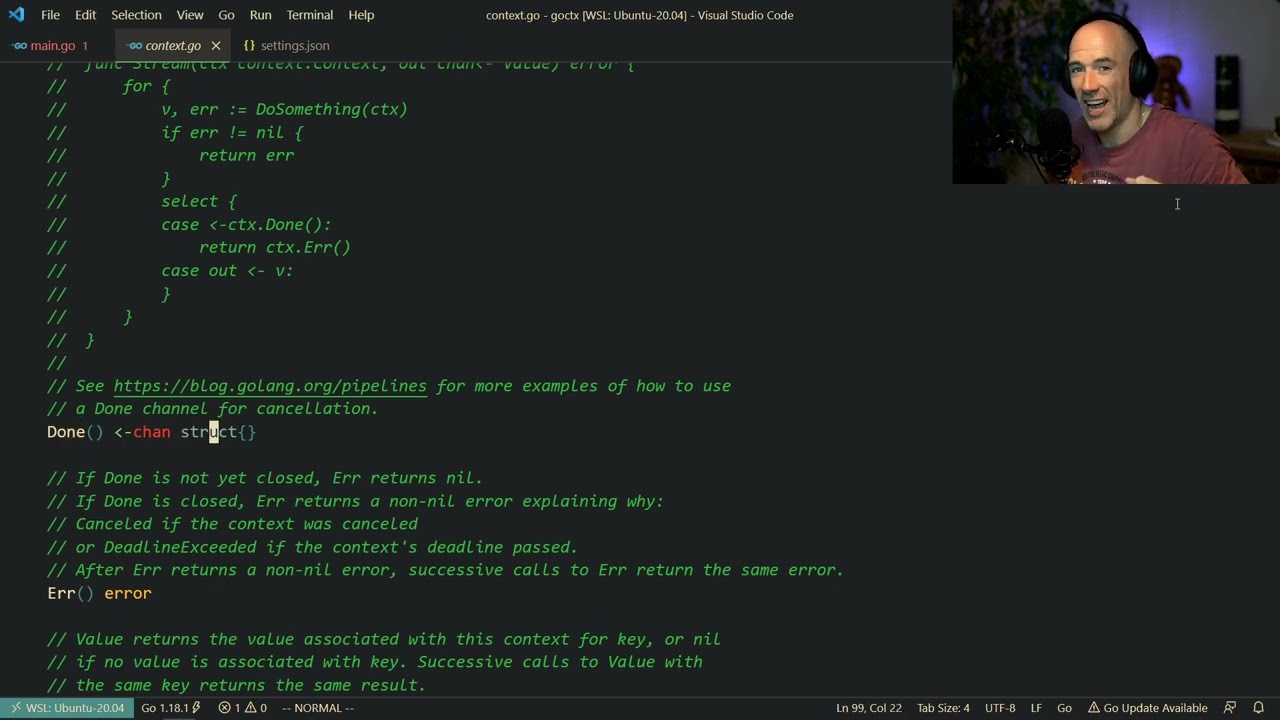
How To Use The Context Package In Golang
Source: Youtube.com
What Is A Request Context, Request Context - 1-minute IAM - Amazon Web Services, 3.23 MB, 02:21, 1,080, Cloud Bart, 2019-09-23T18:18:18.000000Z, 2, Deep Dive into Flask's Application and Request Contexts | TestDriven.io, 561 x 1076, jpg, , 3, what-is-a-request-context
What Is A Request Context. WebRequestContext. Context holder for request-specific state, like current web application context, current locale, current theme, and potential binding errors. Provides.
Bart continues his weekly One-minute (roughly) AWS Identity & Access Management video series. Today he is talking about how IAM uses something called the request context to determine if an API request is allowed or denied. Studying IAM is a great way to prepare for any AWS certifications!
Miss a Lesson? Catch the complete playlist:
CATCH UP - youtube.com/playlist?list=PL3GN5xkPjwo23bCqxjxh0uXVW9tgIfhOi
Subscribe and let me know what you want to see a lesson on or just check back each week as I make my way through this powerful AWS service - a topic found on nearly EVERY AWS EXAM !
Be sure to catch all of Bart's training over at learn.gg/bart-castle - New FREE training content available nearly every week!
Resources:
AWS YouTube
youtube.com/user/AmazonWebServices
AWS Well Architected Framework
aws.amazon.com/architecture/well-architected/
Official AWS Solutions Architect Study Guide
amazon.com/Certified-Solutions-Architect-Study-Guide/dp/111950421X
Official AWS SysOps Associate Study Guide
amazon.com/Certified-SysOps-Administrator-Official-Study/dp/1119377420
AWS Self Paced Labs
amazon.qwiklabs.com/catalog?locale=en
What Is A Request Context, WebThe RequestContext class contains information about the HTTP request in the HttpContext property. It contains information about the route that matched the current request in the. WebA context for a single request to manipulate a flow execution. Allows Web Flow users to access contextual information about the executing request, as well as the governing. WebThe Request Context¶ The request context keeps track of the request-level data during a request. Rather than passing the request object to each function that runs during a.
Deep Dive into Flask's Application and Request Contexts | TestDriven.io - Source: testdriven.io
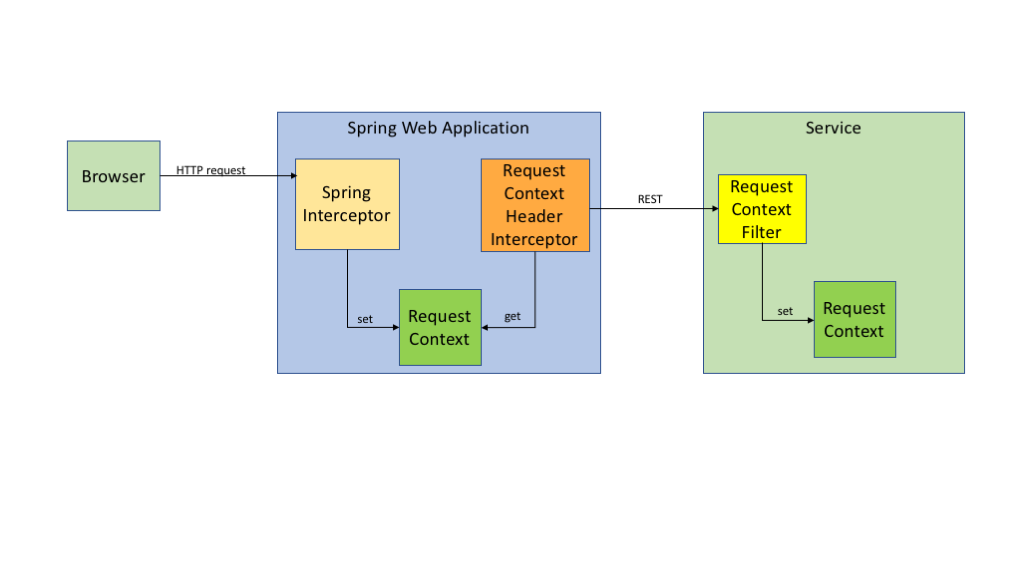
Log4j_Audit – RequestContext - Apache Log4j Audit - Source: logging.apache.org

Application Context and Request Context in Flask - Source: linkedin.com
What is context and why is it important
What is context and why is it important What is http request context.
What is http request context
What is http request context What is request context golang.
What is request context golang
What is request context golang What is request context in java.
.
What is request context in java
What is request context in java What is a request context.
.
What is a request context
What is a request context What is request context in java.
medium.com › @jamal › the-complete-guide-toThe Complete Guide to Context in Golang: Efficient ... - Medium
Context(new features added in go1.21.0) Conclusion; FAQs; 1. What is Context? Context is a built-in package in the Go standard library that provides a powerful toolset for managing concurrent , .
flask.palletsprojects.com › en › 2The Request Context — Flask Documentation (2.3.x)
The Request Context. The request context keeps track of the request-level data during a request. Rather than passing the request object to each function that runs during a request, the request and session proxies are accessed instead. This is similar to The Application Context, which keeps track of the application-level data independent of a , .
.
www.digitalocean.com › how-to-use-contexts-in-goHow To Use Contexts in Go | DigitalOcean
The Context function of an http.Request, for example, will provide a context.Context that includes information about the client making the request and will end if the client disconnects before the request is finished. By passing this context.Context value into a function that then makes a call to the QueryContext function of a sql.DB, the , .
.
.
diegoquintanav.github.io › flask-contextsFlask contexts (And how to use them) | Moving rocks around
The reality is that "application context" is potentially quite a misleading name, because app.app_context() is a per-request context, exactly the same as the "request context". Think of it as a "request context lite", only required in the case where you need some of the variables that normally require a request context, but you don't need , .
.
learn.microsoft.com › en-us › aspnetUse HttpContext in ASP.NET Core | Microsoft Learn
The HttpContext.Abort () method can be used to abort an HTTP request from the server. Aborting the HTTP request immediately triggers the HttpContext.RequestAborted cancellation token and sends a notification to the client that the server has aborted the request. The middleware in the following example: .
.
stackoverflow.com › questions › 38719533Understanding REST APIs - What are Context and @Context?
The JAX-RS API provides a @Context annotation. In general, such annotation can be used to obtain contextual Java types related to the request or response. Those types can be injected into classes managed by the JAX-RS runtime. For example, to inject the HttpServletRequest in your resource method, you can do the following: What does requests mean.
What does requests mean testdriven.io › blog › flask-contextsUnderstanding the Application and Request Contexts in Flask
What does requests mean With Flask, you import in the request object like so: from flask import request @app.route('/users', methods=['GET', 'POST']) def users(): if request.method == 'POST': # Save the form data to the database # Send response else: # Get all users from the database # Send response. In the Flask example, the request object looks, feels, and acts like , What is context and why is it important.

Post a Comment