
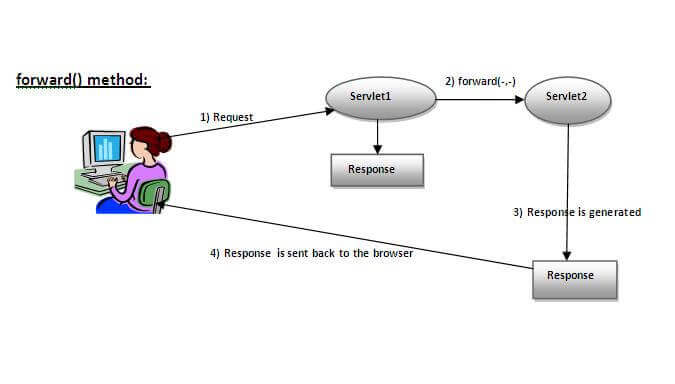
RequestDispatcher is an interface in the Java Servlet API that allows a servlet to forward a request to another resource, such as another servlet, JSP page, or static HTML file. It is a powerful tool that can be used to implement a variety of design patterns, such as the front controller pattern and the MVC pattern.
How to use RequestDispatcher
To use RequestDispatcher, you first need to create an instance of it. This can be done by calling the getRequestDispatcher() method on the ServletRequest object. Once you have an instance of RequestDispatcher, you can call the forward() method to forward the request to the desired resource.
The forward() method takes two parameters: the name of the resource to forward the request to and a boolean value indicating whether or not to include the request attributes in the forwarded request. If the second parameter is set to true, the request attributes will be included in the forwarded request. Otherwise, they will not be included.
Example
The following example shows how to use RequestDispatcher to forward a request to another servlet:
public class MyServlet extends HttpServlet { @Override protected void doGet(HttpServletRequest request, HttpServletResponse response) throws ServletException, IOException { RequestDispatcher dispatcher = request.getRequestDispatcher("/otherServlet"); dispatcher.forward(request, response); } } Benefits of using RequestDispatcher
There are several benefits to using RequestDispatcher:
- It is a simple and easy-to-use interface.
- It is very flexible and can be used to implement a variety of design patterns.
- It is efficient and does not require the servlet to create a new response object.
Use cases for RequestDispatcher
RequestDispatcher can be used in a variety of ways, such as:
- To implement the front controller pattern.
- To implement the MVC pattern.
- To forward requests to different resources based on the user's role.
- To forward requests to different resources based on the user's locale.
- To forward requests to different resources based on the time of day.
Best practices for using RequestDispatcher
Here are some best practices for using RequestDispatcher:
- Use RequestDispatcher to forward requests to other resources, not to redirect them.
- Avoid using RequestDispatcher to forward requests to itself.
- If you need to pass data to the forwarded resource, use request attributes.
- Use the forward() method to forward requests to resources that are located within the same web application.
- Use the sendRedirect() method to forward requests to resources that are located in different web applications.
RequestDispatcher and SEO
RequestDispatcher can be used to improve a website's SEO in a number of ways. For example, it can be used to create a more logical and user-friendly website structure. It can also be used to improve the internal linking of a website.
When used effectively, RequestDispatcher can help search engines to better understand the content of a website and its relationship to other websites. This can lead to improved search engine rankings and increased traffic to the website.
Tips for using RequestDispatcher in SEO
Here are some tips for using RequestDispatcher in SEO:
- Use RequestDispatcher to create a logical and user-friendly website structure. This will make it easier for search engines to crawl and index your website.
- Use RequestDispatcher to improve the internal linking of your website. This will help search engines to understand the relationship between different pages on your website.
- Use RequestDispatcher to forward requests to pages that are relevant to the user's query. This will improve the user experience and increase the chances of a conversion.
- Use RequestDispatcher to avoid duplicate content. Duplicate content can be penalized by search engines, so it is important to avoid it.
Conclusion
RequestDispatcher is a powerful tool that can be used to implement a variety of design patterns and improve a website's SEO. By following the best practices and tips outlined in this article, you can use RequestDispatcher to create a more efficient, user-friendly, and SEO-friendly website.
WebA RequestDispatcher forward() is used to forward the same request to another resource whereas ServletResponse sendRedirect() is a two step process. In. WebDefines an object that receives requests from the client and sends them to any resource (such as a servlet, HTML file, or JSP file) on the server. The servlet container creates the. WebDefines an object that receives requests from the client and sends them to any resource (such as a servlet, HTML file, or JSP file) on the server. The servlet container creates the. WebRequestDispatcher: Defines an object that receives requests from the client and sends them to any resource (such as a servlet, HTML file, or JSP file) on the server.. WebJava RequestDispatcher tutorial shows how to use Java RequestDispatcher to dispatch requests to resources. RequestDispatcher. RequestDispatcher receives. WebYou need RequestDispatcher for that: RequestDispatcher dispatcher = aRequest.getRequestDispatcher (aResponsePage.toString ()); dispatcher.forward.
#8 Servlet and JSP Tutorial | RequestDispatcher and sendRedirect Theory
Source: Youtube.com
#7 Servlet and JSP Tutorial | RequestDispatcher | Calling a Servlet from Servlet

Source: Youtube.com
Requestdispatcher, #8 Servlet and JSP Tutorial | RequestDispatcher and sendRedirect Theory, 7.58 MB, 05:31, 181,307, Telusko, 2018-01-19T14:07:02.000000Z, 2, RequestDispatcher in Servlet - javatpoint, 384 x 675, jpg, , 3, requestdispatcher
Requestdispatcher. WebFor a RequestDispatcher obtained via getRequestDispatcher(), the ServletRequest object has its path elements and parameters adjusted to match the path of the target resource.. WebThe RequestDispatcher is an Interface that comes under package javax.servlet. Using this interface we get an object in servlet after receiving the request..
Complete Servlet and JSP playlist : goo.gl/pKFeSv
n this video we will see :
- Calling servlet from servlet
- What is request dispatcher
- Example of request dispatcher
- sendRedirect method
- Session management
- How sendRedirect works
Editing Monitors :
amzn.to/2RfKWgL
amzn.to/2Q665JW
amzn.to/2OUP21a.
Check out our website: telusko.com
Follow Telusko on Twitter: twitter.com/navinreddy20
Follow on Facebook:
Telusko : facebook.com/teluskolearn...
Navin Reddy : facebook.com/navintelusko
Follow Navin Reddy on Instagram: instagram.com/navinreddy20
Subscribe to our other channel:
Navin Reddy : youtube.com/channel/UCxmk...
Telusko Hindi :
youtube.com/channel/UCitz...
Donation:
PayPal Id : navinreddy20
Patreon : navinreddy20
telusko.com/contactus
Requestdispatcher, WebRequestDispatcher: Defines an object that receives requests from the client and sends them to any resource (such as a servlet, HTML file, or JSP file) on the server.. WebJava RequestDispatcher tutorial shows how to use Java RequestDispatcher to dispatch requests to resources. RequestDispatcher. RequestDispatcher receives. WebYou need RequestDispatcher for that: RequestDispatcher dispatcher = aRequest.getRequestDispatcher (aResponsePage.toString ()); dispatcher.forward.
RequestDispatcher in Servlet - javatpoint - Source: javatpoint.com
RequestDispatcher in Servlet - javatpoint - Source: javatpoint.com
RequestDispatcher in Servlet - javatpoint - Source: javatpoint.com
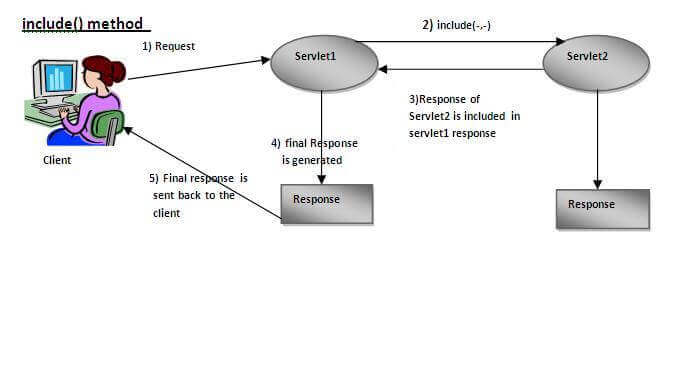
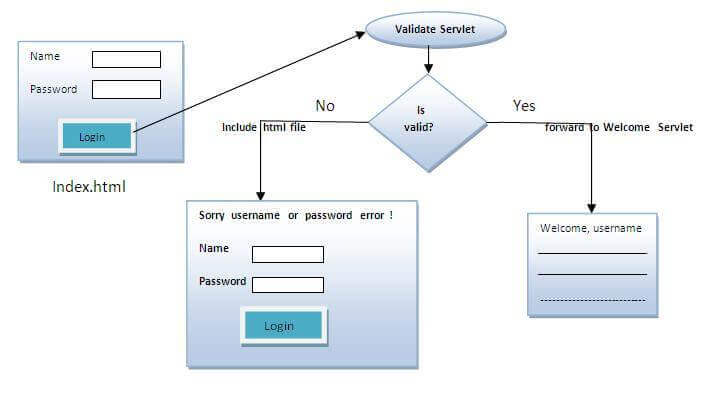
Requestdispatcher forward vs include www.geeksforgeeks.org › servlet-requestdispatcherServlet - RequestDispatcher - GeeksforGeeks
Requestdispatcher forward vs include Learn how to use the RequestDispatcher interface to forward or include requests to other resources in Java servlets. See the syntax, description and examples of the forward and include methods, and the request attributes they set. Requestdispatcher vs sendredirect.
Requestdispatcher vs sendredirect
Requestdispatcher vs sendredirect Requestdispatcher and sendredirect.
Requestdispatcher and sendredirect
Requestdispatcher and sendredirect Requestdispatcher object is used.
.
Requestdispatcher object is used
Requestdispatcher object is used Requestdispatcher in servlet.
.
Requestdispatcher in servlet
Requestdispatcher in servlet Requestdispatcher object is used.
Requestdispatcher include and forward difference examples.javacodegeeks.com › java-developmentJava Servlet RequestDispatcher Tutorial - Java Code Geeks
Requestdispatcher include and forward difference Now, open up the Eclipse Ide and let's see how the RequestDispatcher interface is used to forward or include the response of a resource in a Servlet! 2. Java Servlet RequestDispatcher Tutorial. Here is a step-by-step guide for implementing the Servlet framework in Java. 2.1 Tools Used. We are using Eclipse Kepler SR2, JDK 8 and Maven. Requestdispatcher cannot be resolved to a type.
stackoverflow.com › questions › 3095990servlets - RequestDispatcher in Java - Stack Overflow
RequestDispatcher: Defines an object that receives requests from the client and sends them to any resource (such as a servlet, HTML file, or JSP file) on the server. The servlet container creates the RequestDispatcher object, which is used as a wrapper around a server resource located at a particular path or given by a particular name. Requestdispatcher include and forward difference.
.
.
.
tomcat.apache.org › servlet › RequestDispatcherRequestDispatcher (Apache Tomcat 7.0.109 API Documentation)
Interface RequestDispatcher. public interface RequestDispatcher. Defines an object that receives requests from the client and sends them to any resource (such as a servlet, HTML file, or JSP file) on the server. The servlet container creates the RequestDispatcher object, which is used as a wrapper around a server resource located at a , .
.
.
Requestdispatcher cannot be resolved to a type zetcode.com › java › requestdispatcherJava RequestDispatcher - dispatching requests in Java web ...
Requestdispatcher cannot be resolved to a type Learn how to use RequestDispatcher to dispatch requests to resources in Java web applications. See examples of forward, include, and getRequestDispatcher methods with servlets and JSP pages. Requestdispatcher and sendredirect difference.
Requestdispatcher and sendredirect difference www.javatpoint.com › requestdispatcherRequestDispatcher in Servlet - javatpoint
Requestdispatcher and sendredirect difference Requestdispatcher include.
Requestdispatcher include docs.oracle.com › servlet › RequestDispatcherRequestDispatcher (Java(TM) EE 7 Specification APIs) - Oracle
Requestdispatcher include public interface RequestDispatcher. Defines an object that receives requests from the client and sends them to any resource (such as a servlet, HTML file, or JSP file) on the server. The servlet container creates the RequestDispatcher object, which is used as a wrapper around a server resource located at a particular path or given by a , Requestdispatcher is used.
Requestdispatcher is used
Requestdispatcher is used Requestdispatcher forward vs include.


Post a Comment