

Artificial intelligence (AI) is rapidly transforming the field of chemistry, and one of its most exciting applications is in the context of the periodic table. AI can be used to analyze vast amounts of chemical data to identify patterns and trends that would be difficult or impossible for humans to discover on their own. This information can then be used to develop new materials, design new catalysts, and predict the properties of new molecules.
One way that AI is being used to study the periodic table is to develop new methods for predicting the properties of elements and compounds. In the past, chemists have relied on experimental data to determine these properties. However, this can be a time-consuming and expensive process. AI can be used to develop models that can predict the properties of elements and compounds with high accuracy, based on their atomic structure and composition.
Another way that AI is being used to study the periodic table is to identify new relationships between elements and compounds. For example, AI can be used to predict which elements are most likely to form new compounds with each other. This information can then be used to design new materials and catalysts. AI can also be used to identify new trends in the periodic table, such as the relationship between atomic size and reactivity.
In addition to its applications in materials science and catalysis, AI is also being used to study the periodic table in other areas of chemistry, such as organic chemistry, inorganic chemistry, and physical chemistry. For example, AI is being used to design new drugs, develop new energy sources, and understand the chemical processes that occur in living organisms.
Here are some specific examples of how AI is being used to study the periodic table:
- AI is being used to design new catalysts. Catalysts are substances that speed up chemical reactions without being consumed themselves. AI can be used to design new catalysts that are more efficient and selective than existing catalysts. This could lead to new ways to produce chemicals and fuels more efficiently and sustainably.
- AI is being used to develop new materials. AI can be used to design new materials with specific properties, such as strength, lightness, or conductivity. This could lead to new materials for use in engineering, construction, and electronics.
- AI is being used to predict the properties of new molecules. AI can be used to predict the properties of new molecules, such as their melting point, boiling point, and solubility. This information can be used to design new molecules with specific properties for use in drugs, materials, and other applications.
- AI is being used to identify new relationships between elements and compounds. AI can be used to identify new relationships between elements and compounds, such as the relationship between atomic size and reactivity. This information can be used to develop new theories about chemical bonding and to design new materials and catalysts.
- AI is being used to understand the chemical processes that occur in living organisms. AI can be used to understand the chemical processes that occur in living organisms, such as metabolism and signaling. This information could lead to new ways to diagnose and treat diseases.
Overall, AI is a powerful tool that is being used to study the periodic table in new and innovative ways. AI is helping chemists to make new discoveries about the elements and compounds that make up our world, and to develop new technologies that have the potential to benefit society in many ways.
Impact of AI on the study of the periodic table
The impact of AI on the study of the periodic table is still in its early stages, but it is already having a significant impact. AI is helping chemists to make new discoveries about the elements and compounds that make up our world, and to develop new technologies that have the potential to benefit society in many ways.
For example, AI is being used to design new catalysts that could lead to new ways to produce chemicals and fuels more efficiently and sustainably. AI is also being used to develop new materials with specific properties, such as strength, lightness, or conductivity. This could lead to new materials for use in engineering, construction, and electronics.
In addition, AI is being used to predict the properties of new molecules and to identify new relationships between elements and compounds. This information could lead to the development of new drugs, materials, and other applications.
Overall, AI is a powerful tool that is transforming the field of chemistry. AI is helping chemists to make new discoveries about the periodic table and to develop new technologies that have the potential to benefit society in many ways.
Future of AI in the study of the periodic table
The future of AI in the study of the periodic table is very bright. As AI technology continues to develop, we can expect to see even more innovative and impactful applications of AI in chemistry.
For example, we can expect to see AI being used to design new materials with atomic precision. This could lead to the development of new materials with unprecedented properties, such as superconductivity at room temperature or materials that are incredibly strong and lightweight.
We can also expect to see AI being used to develop new
WebPeriodic Table. The Royal Society of Chemistry's interactive periodic table features history, alchemy, podcasts, videos, and data trends across the periodic table. Click the tabs at. WebIt took nearly a century for human scientists to organize the periodic table of elements into its current form, but a new artificial intelligence (AI) program developed by. WebBy recreating the periodic table of elements, Atom2Vec has achieved this secondary goal, Zhang said. Researchers modelled Atom2Vec on an AI program that Google engineers.
What does AI know about the periodic table
Source: Youtube.com
AI recreates Chemistry's Periodic Table of Elements
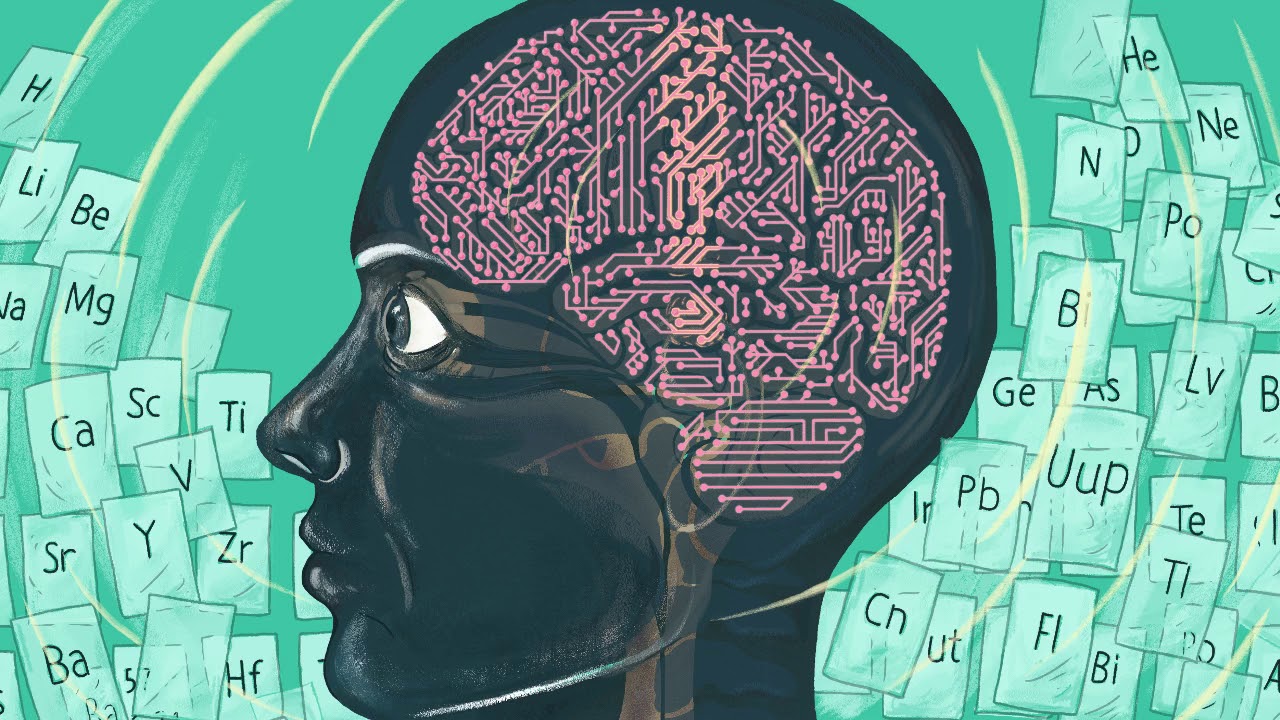
Source: Youtube.com
What Is Ai In Chemistry Periodic Table, What does AI know about the periodic table, 1.05 MB, 00:46, 92, Learning with AI, 2023-03-24T08:14:26.000000Z, 2, The Periodic Table of AI [Hammond] - Learning Ecosystems, 598 x 928, jpg, , 3, what-is-ai-in-chemistry-periodic-table
What Is Ai In Chemistry Periodic Table.
what can an Ai tell us about the periodic table. Comment if you find any mistakes. Like and subscribe to the channel.
© Source from chatgpt
© Video made by pictory.ai
© Voiceover by elevenlabs.com
What Is Ai In Chemistry Periodic Table, WebPeriodic Table. The Royal Society of Chemistry's interactive periodic table features history, alchemy, podcasts, videos, and data trends across the periodic table. Click the tabs at. WebIt took nearly a century for human scientists to organize the periodic table of elements into its current form, but a new artificial intelligence (AI) program developed by. WebBy recreating the periodic table of elements, Atom2Vec has achieved this secondary goal, Zhang said. Researchers modelled Atom2Vec on an AI program that Google engineers.
The Periodic Table of AI [Hammond] - Learning Ecosystems - Source: Daniel Christian
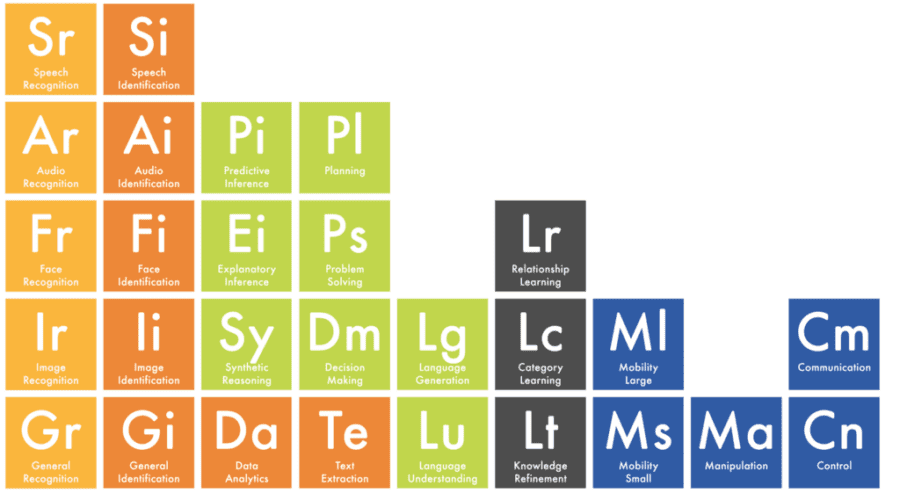
The Periodic Table Of AI - DataScienceCentral.com - Source: datasciencecentral.com
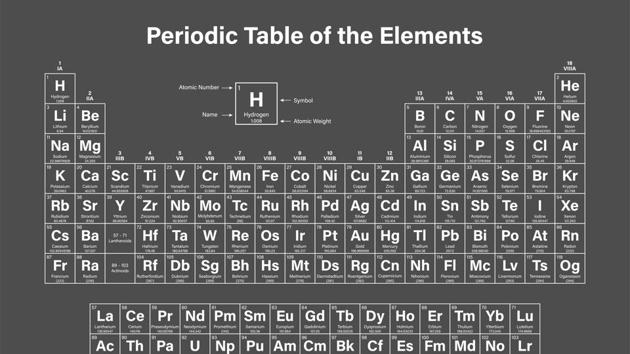
Artificial Intelligence recreates periodic table of elements within few hours - Hindustan Times - Source: hindustantimes.com
.
.
What is ai periodic table.
.
What is ai periodic table
What is ai periodic table What is ai in chemistry periodic table.
.
What is ai in chemistry periodic table
What is ai in chemistry periodic table What is ai periodic table.
www.futurity.org › artificial-intelligenceA.I. recreates periodic table of elements from scratch
A new artificial intelligence (AI) program recreated the periodic table of elements in just a few hours. It took nearly a century of trial and error for human scientists to organize the, .
www.hindustantimes.com › science › artificialAI recreates periodic table of elements within few hours
a feat that took mankind nearly a century, .
.
.
.
phys.org › news › 2018-06-ai-recreates-chemistryAI recreates chemistry's periodic table of elements - Phys.org
June 26, 2018. AI recreates chemistry's periodic table of elements. by Ker Than, Stanford University. A Stanford team has developed an artificial intelligence program that recreated the, .
analyticsindiamag.com › ai-recreates-chemistryAI Recreates Chemistry's Periodic Table Of Elements In A ...
Now, an AI programme called Atom2Vec, developed by Stanford physicists has successfully learned to distinguish between different atoms after analysing a list of chemical compound names from an online database. The programme uses concepts from natural language processing to cluster the elements together according to their chemical properties. .
.
www.zmescience.com › science › periodic-table-aiAn AI recreated the periodic table from scratch -- in a ...
A new artificial intelligence (AI) program developed at Stanford recreated the periodic table from scratch — and it only needed a couple of hours to do so. If you've ever wondered how, .
.
news.stanford.edu › 2018/06/25 › ai-recreatesStanford AI recreates chemistry's periodic table of elements
A new artificial intelligence (AI) program developed by Stanford physicists accomplished the same feat in just a few hours. Called Atom2Vec, the program successfully learned to distinguish between different atoms after analyzing a list of chemical compound names from an online database. .
chemistry.stanford.edu › news › stanford-aiStanford AI recreates chemistry's periodic table of elements
A new artificial intelligence (AI) program developed by Stanford physicists accomplished the same feat in just a few hours. Called Atom2Vec, the program successfully learned to distinguish between different atoms after analyzing a list of chemical compound names from an online database. .


 is rapidly transforming the field of chemistry, and one of its most exciting applications is in the context of ...)
Post a Comment