

A title text feature is a type of text feature that is used to give a brief overview of the topic of a text. Titles are typically found at the beginning of a text, but they can also be found within a text to introduce new sections or ideas.
Titles are important because they help readers to understand what a text is about and to decide whether or not they want to read it. They can also help readers to skim or scan a text to find specific information.
Titles can be written in a variety of ways, but they should be clear, concise, and informative. They should also be accurate and reflect the content of the text.
Examples of Title Text Features
Here are some examples of title text features:
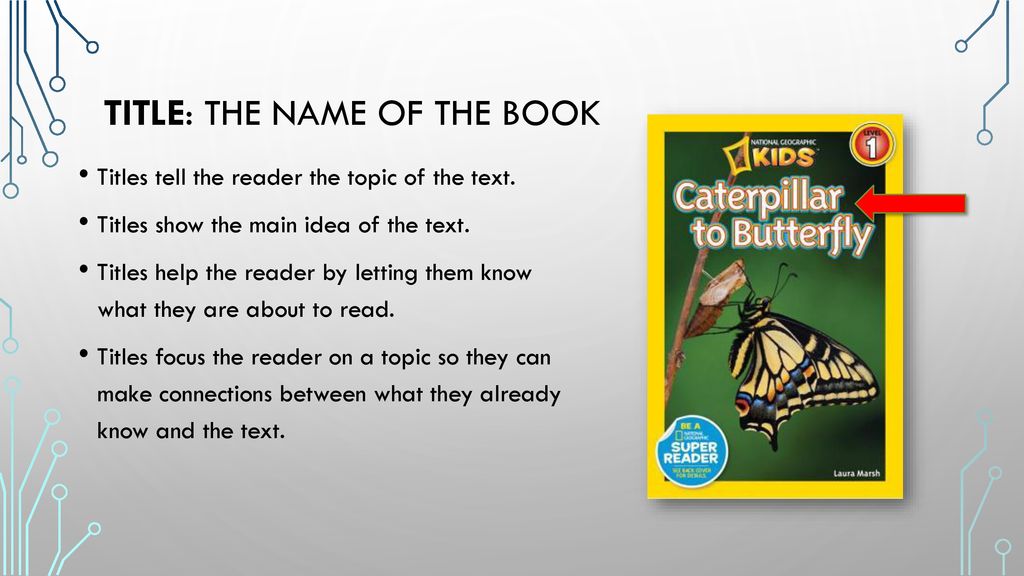
- Book titles: The title of a book is a type of title text feature that gives readers a brief overview of the topic of the book. For example, the title of the book "Harry Potter and the Sorcerer's Stone" gives readers a brief overview of the fact that the book is about a young wizard named Harry Potter.
- Article titles: The title of an article is a type of title text feature that gives readers a brief overview of the topic of the article. For example, the title of the article "How to Write a Blog Post" gives readers a brief overview of the fact that the article is about how to write a blog post.
- Chapter titles: The title of a chapter is a type of title text feature that gives readers a brief overview of the topic of the chapter. For example, the title of the chapter "The Sorting Hat" in the book "Harry Potter and the Sorcerer's Stone" gives readers a brief overview of the fact that the chapter is about the Sorting Hat, which is a hat that sorts new students at Hogwarts School of Witchcraft and Wizardry into different houses.
- Section headings: Section headings are a type of title text feature that is used to divide a text into smaller sections and to introduce new topics. For example, the section heading "The Importance of Titles" in this blog post introduces the new topic of the importance of titles.
How to Write Effective Title Text Features
Here are some tips on how to write effective title text features:
- Be clear and concise. Titles should be easy to understand and should not be too long.
- Be informative. Titles should give readers a brief overview of the topic of the text.
- Be accurate. Titles should reflect the content of the text.
- Use keywords. Titles should include keywords that readers are likely to search for.
- Be creative. Titles can be creative and catchy, but they should still be informative and accurate.
Benefits of Using Title Text Features
There are several benefits to using title text features:
- Titles help readers to understand what a text is about. When readers see a title, they can quickly get an idea of what the text is about. This helps them to decide whether or not they want to read the text.
- Titles help readers to skim or scan a text to find specific information. Readers can skim or scan a text by looking at the titles of the different sections. This helps them to find specific information quickly and easily.
- Titles help to organize a text. Titles can be used to divide a text into smaller sections and to introduce new topics. This helps readers to follow the flow of a text and to understand the relationships between different ideas.
- Titles can make a text more visually appealing. Titles can be used to break up a text and to make it more visually appealing. This can help to encourage readers to read the text.
Conclusion
Title text features are an important part of many different types of texts. They help readers to understand what a text is about, to skim or scan a text to find specific information, to follow the flow of a text, and to make a text more visually appealing.
HTML Format and HTML Tags
The following is an example of how to format the above blog post in HTML:
<!DOCTYPE html> <html> <head> <title>What Is A Title Text Feature?</title> </head> <body> <h2>What Is A Title Text Feature?</h2> <p>A title text feature is a type of text feature that is used to give a brief overview of the topic of a text. Titles are typically found at the beginning of a text, but they can also be found within a text to introduce new sections or ideas.</p> <h2>Examples of Title Text Features</h2> <p>Here are some examples of title text features:</p> <ul> <li>Book titles</li> <li>Article titles</li> <li>Chapter titles</li> <li>Section headings</li> </ul> <h2>How to Write Effective Title Text Features</h2> <p>Here WebTitle – quickly lets the reader know what the text is primarily about Table of contents – breaks down the text into smaller sections and helps the reader see the. WebText Feature. An element of a text that aids in the organization or that supports meaning. Examples of text features include title, headings and subheadings, graphics (such as. WebThe term text features is used in an academic setting to describe all of the components or features associated with an article or nonfiction text that are not.
Text Features | English - Quizizz
Source: quizizz.com
Text Features. - ppt download
Source: slideplayer.com
MrsQuimbyReads | Teaching Resources: Informational Text Features - Build An Interactive Bulletin Board

Source: mrsquimbyreads.blogspot.com
What Is A Title Text Feature, Nonfiction Text Features, 5.1 MB, 03:43, 401,354, Brandy Addison, 2020-11-06T14:12:18.000000Z, 2, Text Features | English - Quizizz, quizizz.com, 507 x 900, jpg, , 3, what-is-a-title-text-feature
What Is A Title Text Feature. WebTitles and Subtitles. Titles and subtitles (or headings and subheadings) give information about what a section is about. In nonfiction, they may also give important.
Text Features | English - Quizizz
What Is A Title Text Feature, WebText Feature. An element of a text that aids in the organization or that supports meaning. Examples of text features include title, headings and subheadings, graphics (such as. WebThe term text features is used in an academic setting to describe all of the components or features associated with an article or nonfiction text that are not.
Nonfiction Text Features

Source: Youtube.com
Nonfiction Text Features | Jack Hartmann

Source: Youtube.com
.
.
What is title text.
.
What is title text
What is title text What is a title text feature.
.
What is a title text feature
What is a title text feature What is title text.
shop.capstonepub.com › classroom › sitesTable 1.2: Text Feature Definitions and Examples How this ...
Chapter 1. Type of text feature and definition. How this feature helps readers. Visual example of feature. Inset. A small photo, picture, or map inside or next to a larger picture; insets magnify a part of the larger picture. Helps the reader visualize something in the text in both large and small scale, in combination with the larger picture. .
www.fractuslearning.com › what-are-text-featuresWhat Are Text Features? Here Are Some Text Feature Examples
The book title tells students what the book is about, and each chapter title indicates to students what they will learn about in that chapter. Nonfiction text features like titles and subtitles teach students new vocabulary words and concepts that allow them to think about the meaning of the text. Table Of Contents .
.
.
.
.
.
.
helpfulprofessor.com › text-features-examples27 Text Features Examples (2024) - Helpful Professor
.
atutor.ca › text-featuresWhat Are Text Features? The 6 Most Common Text Features
.
.
www.weareteachers.com › text-featuresWhat Are Text Features? Examples and a Teaching Guide
Titles and subtitles (or headings and subheadings) give information about what a section is about. In nonfiction, they may also give important new vocabulary words that help with understanding the meaning of a text. Titles and subtitles also give information about how a text is organized. .


Post a Comment