
Introduction
Citing evidence in text is the process of providing examples and examples from the text to support a claim or argument. This can be done through direct quotations or paraphrasing. Citing evidence is an important part of academic writing, as it helps to demonstrate that the writer has a strong understanding of the text and that their claims are well-supported.
Benefits of citing evidence
There are many benefits to citing evidence in text, including:
- Credibility: Citing evidence shows the reader that the writer has done their research and that their claims are based on facts and expert opinions. This helps to establish the writer's credibility and makes the reader more likely to trust their claims.
- Accuracy: Citing evidence helps to ensure that the writer's claims are accurate and up-to-date. By providing specific examples from the text, the writer can show the reader exactly where they got their information from.
- Clarity: Citing evidence can help to make the writer's claims more clear and understandable. By providing specific examples, the writer can help the reader to visualize the evidence and to see how it supports their claims.
- Support: Citing evidence helps to support the writer's claims and to make them more persuasive. By providing specific examples, the writer can show the reader why their claims are believable and why they should agree with them.
How to cite evidence
There are two main ways to cite evidence in text: through direct quotations and through paraphrasing.
Direct quotations: A direct quotation is when you use the exact words of the author in your own writing. When using a direct quotation, you must enclose the quotation in quotation marks and cite the source of the quotation.
Paraphrasing: Paraphrasing is when you put the author's ideas into your own words. When paraphrasing, you must still cite the source of the information, even though you are not using the author's exact words.
Examples of citing evidence
Here are some examples of how to cite evidence in text:
Direct quotation:
"The purpose of citing evidence in text is to support your claims and to make them more persuasive." (Smith, 2023)
Paraphrase:
Smith (2023) argues that citing evidence in text is important because it helps to support the writer's claims and to make them more persuasive.
Tips for citing evidence
Here are some tips for citing evidence in text:
- Choose evidence that is relevant to your claims and that supports your argument.
- Be sure to cite the source of all evidence, whether you are using a direct quotation or paraphrasing.
- Use quotation marks correctly when using direct quotations.
- Cite evidence throughout your text, not just in the introduction and conclusion.
- Use evidence to support your claims, not to replace your own ideas.
Conclusion
Citing evidence in text is an important part of academic writing. By citing evidence, you can demonstrate your credibility, accuracy, clarity, and support for your claims. When citing evidence, be sure to choose relevant evidence, cite the source of all evidence correctly, and use evidence throughout your text to support your claims.
Subtitle 1: The importance of citing evidence
Citing evidence is important for a number of reasons. First, it shows the reader that you have done your research and that your claims are based on facts and expert opinions. This helps to establish your credibility and makes the reader more likely to trust your claims.
Second, citing evidence helps to ensure that your claims are accurate and up-to-date. By providing specific examples from the text, you can show the reader exactly where you got your information from. This is especially important when making claims that are controversial or that may be unfamiliar to the reader.
Third, citing evidence can help to make your claims more clear and understandable. By providing specific examples, you can help the reader to visualize the evidence and to see how it supports your claims. This can be especially helpful when making complex or nuanced claims.
Finally, citing evidence helps to support your claims and to make them more persuasive. By providing specific examples, you can show the reader why your claims are believable and why they should agree with them. This is especially important when making claims that are arguable or that may be met with resistance from the reader.
Subtitle 2: How to cite evidence
There are two main ways to cite evidence in text: through direct quotations and through paraphrasing.
Direct quotations: A direct quotation is when you use the exact words of the author in your own writing. When using a direct quotation, you must enclose the quotation in quotation marks and cite the source of the quotation. For example:
"The
WebSupporting evidence. Key words: evidence, supported/unsupported fact, example, statistics, quotations. For every claim you make in your writing, you will be required to prove your. WebInclusive Big Idea #1: Cite details from the text to ask and answer literal and inferential questions Standard : Cite textual evidence to support analysis of what the text says. WebTextual evidence is the collection of verified sources that are cited to support assertions made when writing and analyzing text. Learn how to use textual evidence in. WebWhenever you write about ideas presented in a text, you must provide evidence from that text to prove your point, explaining how and why the evidence you have provided. WebPointing out the strengths and limitations of your evidence in a way that anticipates the audience's knowledge level, concerns, values, and possible biases helps you select the.
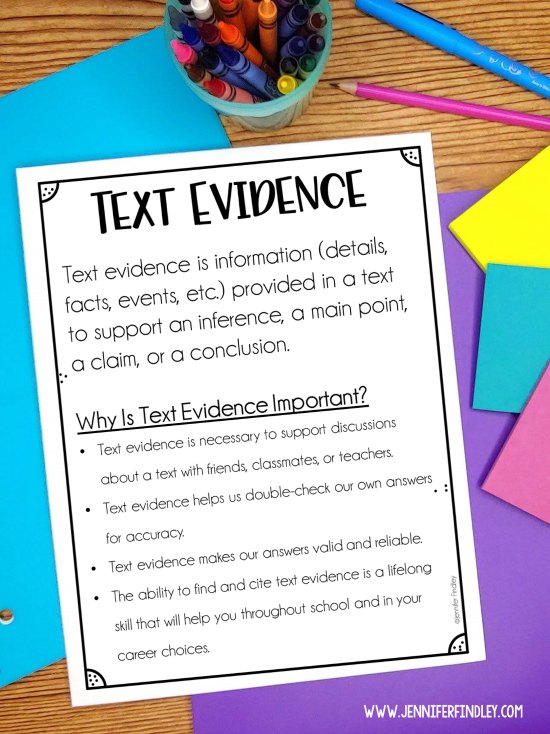
Text Evidence Activities and Strategies - Tips for Teaching Students to Find Text Evidence
Source: jenniferfindley.com
Citing Textual Evidence - ppt download

Source: slideplayer.com
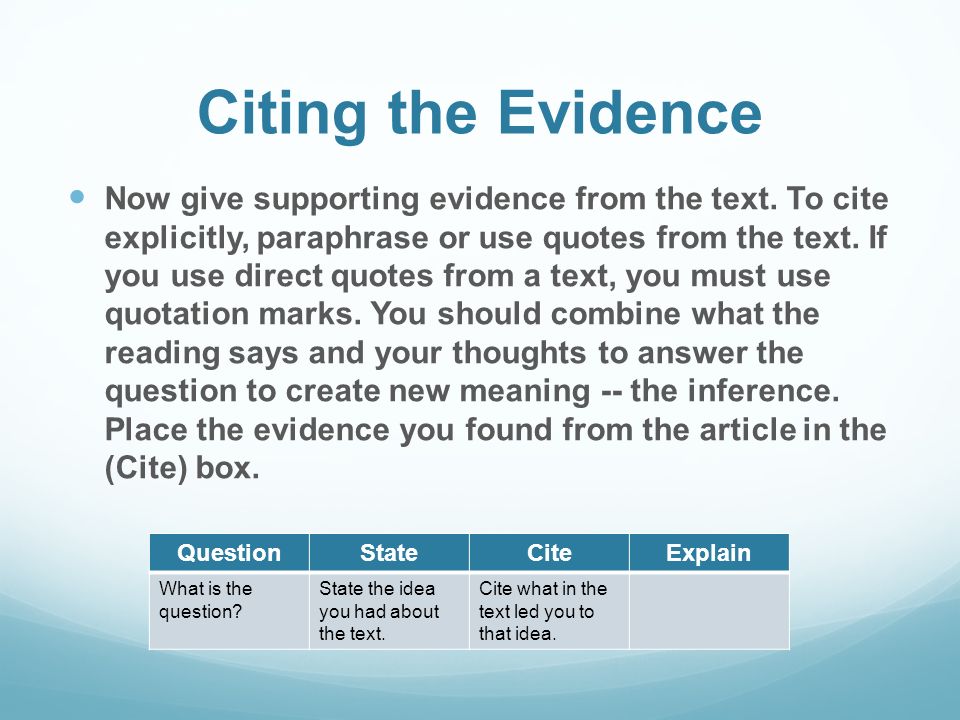
CITING TEXTUAL EVIDENCE - ppt video online download
Source: slideplayer.com
What Is The Purpose Of The Text Cite Evidence To Support Your Answer, Cite Evidence to Support a General Statement, 6.02 MB, 04:23, 22,258, Teacher Aya EducaToon, 2021-04-29T16:08:56.000000Z, 2, Text Evidence Activities and Strategies - Tips for Teaching Students to Find Text Evidence, jenniferfindley.com, 734 x 550, jpg, , 3, what-is-the-purpose-of-the-text-cite-evidence-to-support-your-answer
What Is The Purpose Of The Text Cite Evidence To Support Your Answer. WebIn this lesson, we will discuss effective ways to cite textual evidence when analyzing a text to support your claims, as well as what does not count as sufficient support.
#CitingEvidence #CALMstrategy #MELC19
MELC 19: Cite evidence to support a general statement
All texts or reading passages have evidence. If you find it difficult answering
questions and proving your answers as correct, use CALM Strategy as your guide.
This video teaches you how to use CALM strategy in citing evidence to support your claim or answer the question.
source: Region IV-A Learner's Packet (LeaP)
Text Evidence Activities and Strategies - Tips for Teaching Students to Find Text Evidence
What Is The Purpose Of The Text Cite Evidence To Support Your Answer, WebWhenever you write about ideas presented in a text, you must provide evidence from that text to prove your point, explaining how and why the evidence you have provided. WebPointing out the strengths and limitations of your evidence in a way that anticipates the audience's knowledge level, concerns, values, and possible biases helps you select the.
Cite Evidence to Support a General Statement
Source: Youtube.com
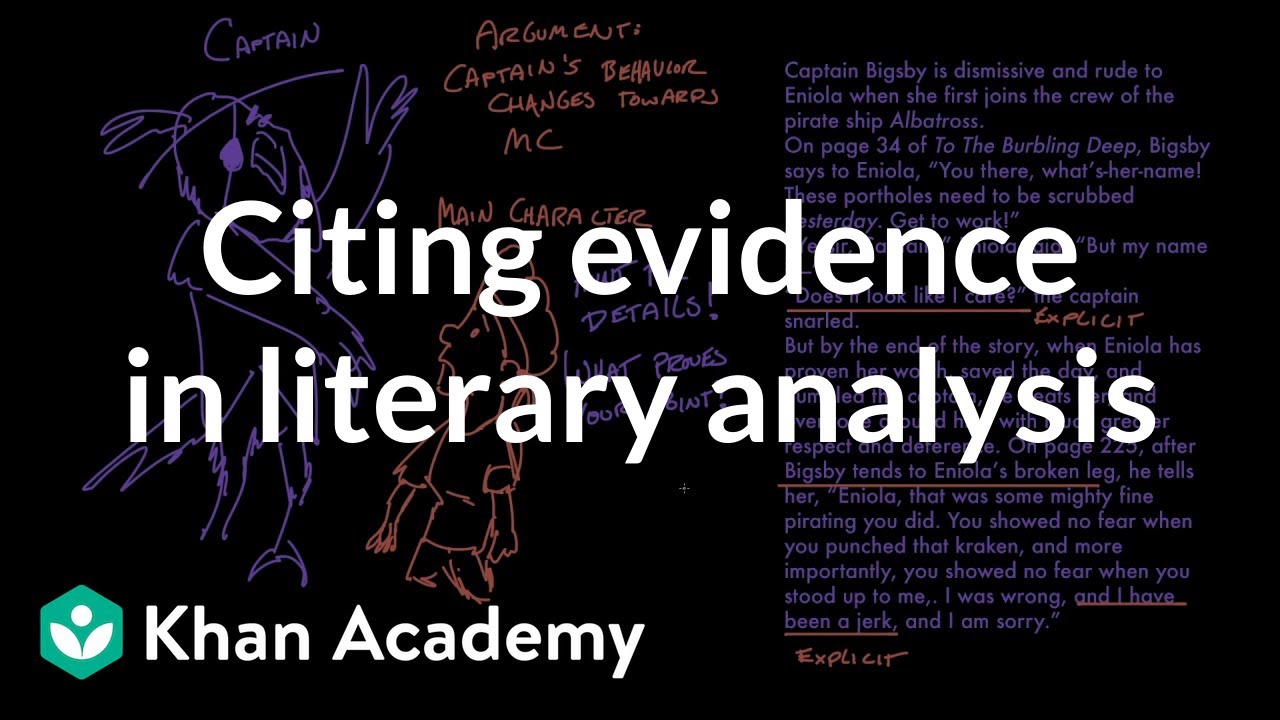
Citing evidence in literary analysis | Reading | Khan Academy
Source: Youtube.com
study.com › academy › lessonCiting Textual Evidence | Steps, Importance & Examples
When analyzing a text, it is important for writers to cite evidence in order to support their claims. Citing evidence means providing examples from a text in order to prove that the, .
.
.
.
.
.
.
www.easybib.com › citing-relevant-evidenceCiting Evidence | EasyBib
Relevant Evidence for Claims and Counterclaims. As a writer, you need to supply the most relevant evidence for claims and counterclaims based on what you know about your audience. Your claim is your position on the subject, while a counterclaim is a point that someone with an opposing view may raise. Pointing out the strengths and limitations , .
study.com › academy › lessonCiting Textual Evidence to Support Analysis - Study.com
Textual evidence is the collection of verified sources that are cited to support assertions made when writing and analyzing text. Learn how to use textual evidence in analysis, and make, .
.
.
.
.
.
.
tiescenter.org › topics › inclusive-instructionCite details from the text to ask and answer literal and ...
Provide students with a highlighter. Students can pour through the text to find details and examples to support the questions posed by the teacher. Think Aloud: To model how to refer to details and examples in a text to explain what the text says explicitly, the teacher should read aloud a book in front of the class. Then, periodically, the , .
jenniferfindley.com › text-evidenceText Evidence Activities and Strategies - Tips for Teaching ...
.
www.khanacademy.org › ela › cc-7th-reading-vocabCiting evidence in literary analysis | Reading - Khan Academy
Yes, we're talking about citing evidence in literary analysis. When you're talking about a text and making arguments about it, in order to successfully build that argument, you must make inferences and draw conclusions. And those must be built on the back of evidence. Both explicit, that is stated in the text, or implicit or based on clues or , .
.


Post a Comment